Energy and Tradition: The Legacy of the Hammam and the Gardens of Al-Andalus
Energy is essential to enhance the contrast in temperatures that brings the treatments provided in the hammam to life. Since the time of Al-Andalus, both energy and water have been extremely valuable resources that had to be managed wisely. This was the responsibility of the Muhtasib—public servants who also ensured the upkeep of the gardens, important gathering places where people could enjoy cooler temperatures during the hot months.
The garden and the hammam were social hubs that were essential to the city. Both were built using architectural and civil engineering systems driven by a visionary concept that makes perfect sense today.
The buildings that housed the baths had thick walls and no windows facing the outside, to retain heat. The walls contained an internal network of clay pipes through which hot water circulated to warm the rooms. The dim light inside shone timidly through star-shaped skylights or dormer windows; these opened from the top of the vaults to regulate the temperature and provide ventilation.
The baths were accessed through the entrance hall or the courtyard that connected to the changing room. Inside, the first room was the frigidarium, or cold room, followed by the tepidarium, or warm room, and the caldarium, or hot room with steam. The energy to heat this last room was produced in a furnace, fed from a small room where the wood storage area was located. The furnace opening was situated beneath the hollow floor of the room, onto which water was poured; upon contact with the stone, this produced steam.
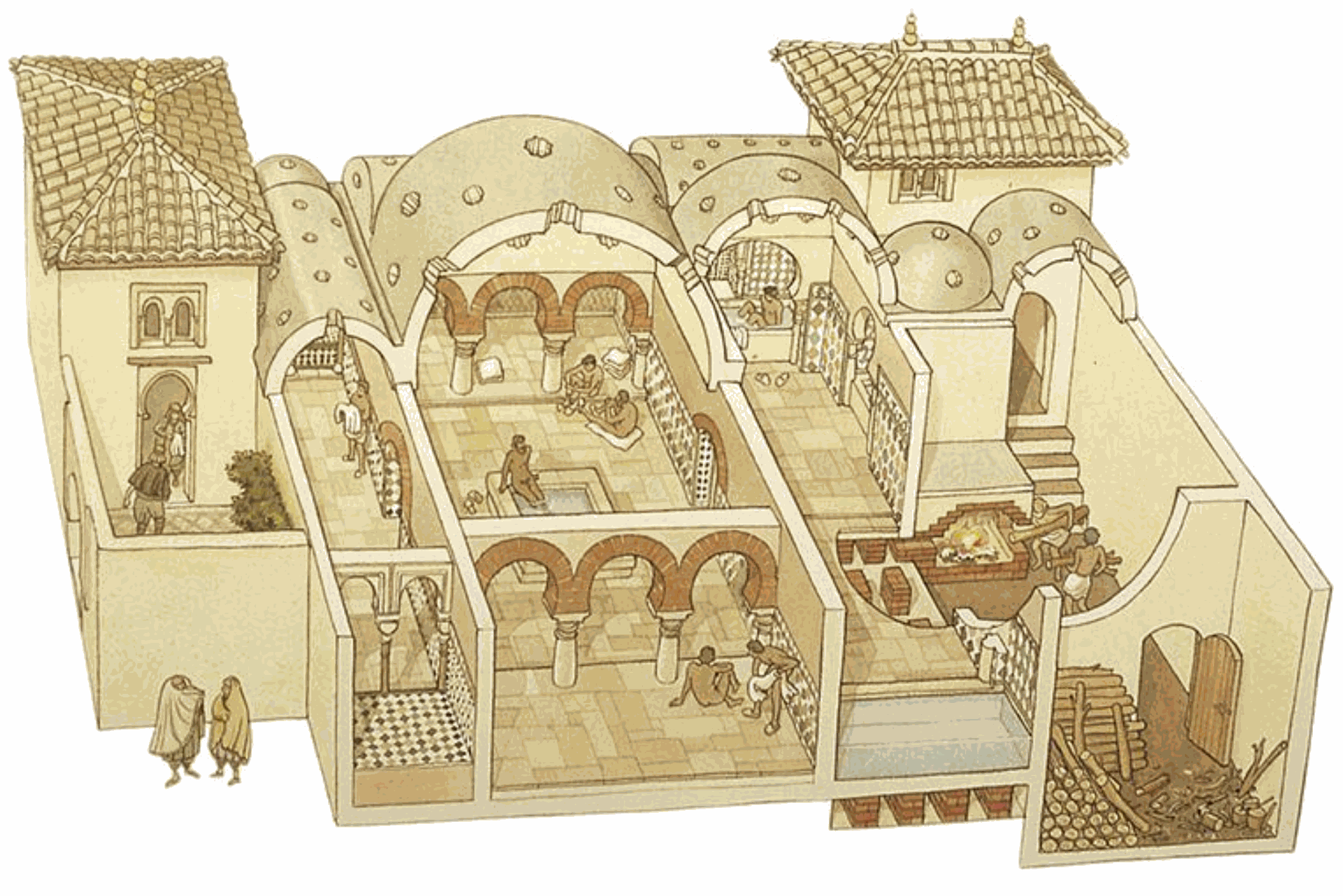
Image: El Legado Andalusí Foundation
The gardens, for their part, were true metaphors for paradise. Water, flowers, and vegetation shaped refined spaces designed to enjoy the coolness created by the layout of canals, fountains, pools, and cisterns. In these climatic refuges of the time, the cultivation of beauty and the care of resources fostered a vision of the future that the contemporary hammam revives.
Where there were once wood-burning stoves, there are now geothermal pipes that draw heat from the earth to generate the energy needed to power the hammam. The use of this energy allows us to interact respectfully with the environment and all the life forms that inhabit it, enabling us to preserve the tradition of the bath for future generations, because, as the poet of the gardens, Ibn Jafaya, says:
Oh, people of Al-Andalus, how blessed you are to have
shade, rivers, and trees! The garden of eternal bliss is not
somewhere else,
but right here in your land; if I could choose, this is the
place I would choose.
Do not think that tomorrow you will enter hell; one
does not enter hell after having been in paradise!
Antonio Rivadeneyra Sicilia